What Makes a Pediatric Dental Exam Different from an Adult Visit?
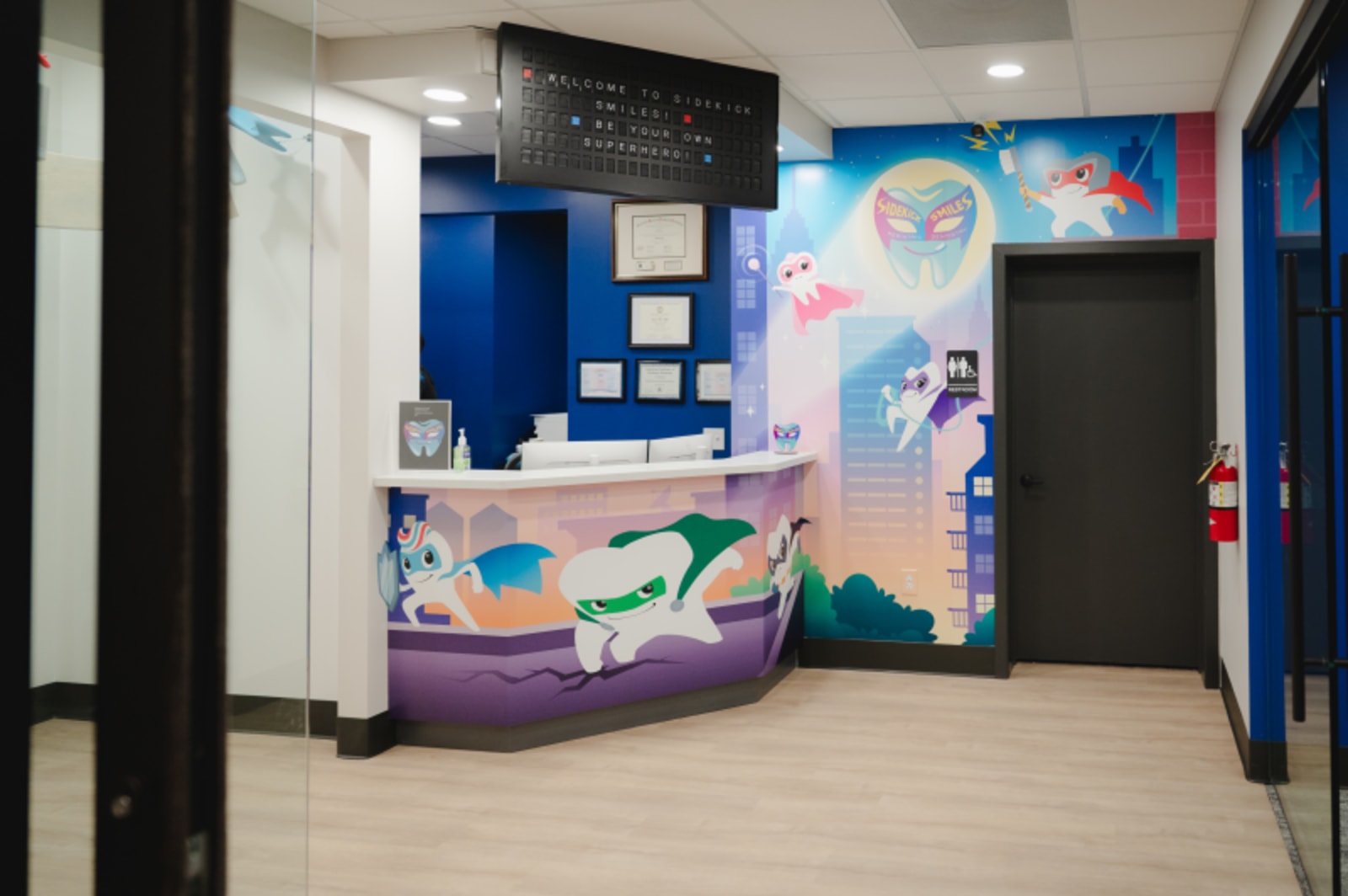
Walk your child into a pediatric dental office and you can feel the difference before anyone says a word. Color on the walls, a game room, no one whispering. But beyond the atmosphere, a fair question forms: is what happens in that chair anything like your own six-month checkup? Not really, and the gap is bigger than most parents expect.
A pediatric exam tracks things an adult visit never touches: when teeth are coming in, how the bite is developing, whether your child is breathing the way they should, and how to make the whole experience feel safe enough that they actually want to come back. At Sidekick Smiles, we'll walk you through what makes it different and why it matters starting from the very first visit.
Have questions before you book? Call Dr. Deep and the team at (610) 992-4910.
What to Know First
- A child's exam tracks a moving timeline, not a finished mouth. We look at where things are headed.
- Behavior guidance is a trained clinical skill, not just a friendly personality.
- Prevention looks different for kids, with varnishes and sealants that protect enamel before problems start.
- Half the visit is coaching, and the topics shift as your child grows.
- Start by the first birthday or the first tooth. It is a friendly hello, not a search for problems.
A Pediatric Exam Reads a Timeline, Not a Snapshot
A child's mouth is never finished. Baby teeth are still arriving, permanent teeth are forming quietly in the jaw months or years before anyone sees them, and the jaw itself grows in response to how your child chews, swallows, and breathes at night. There's no single frozen moment to evaluate, so the exam tracks where things are headed, not just where they are today.
Eruption and Spacing
Teeth arriving roughly on schedule, in roughly the right spot, tell us a lot. So does a baby tooth hanging on well past its time. We're looking ahead to whether there's enough room for the permanent teeth waiting underneath. Crowding noticed at seven is a very different conversation than crowding discovered at fifteen, when growth is nearly done and the easy options have narrowed.
How the Bite Is Coming Together
The relationship between the upper and lower jaws is still settling all through childhood. Crossbites, deep bites, and open bites usually send small signals long before anyone would call them a problem, and because kids are growing, there's a window where gentle guidance goes a long way. Dr. Deep walks you through what he's seeing at each checkup, including the things he's simply keeping an eye on.
Habits, Breathing, and Sleep
Things like thumb-sucking, a pacifier that stuck around, mouth breathing, snoring, restless sleep, and how the tongue rests all shape how the mouth develops. Dr. Deep is an Airway Certified Provider, so when he asks how your child sleeps, it isn't small talk. It's part of the exam. A tongue or lip tie that limits movement connects to this too, and when a release is genuinely needed, we do it with a CO2 laser.
What the X-Rays Show, and How You'll See It
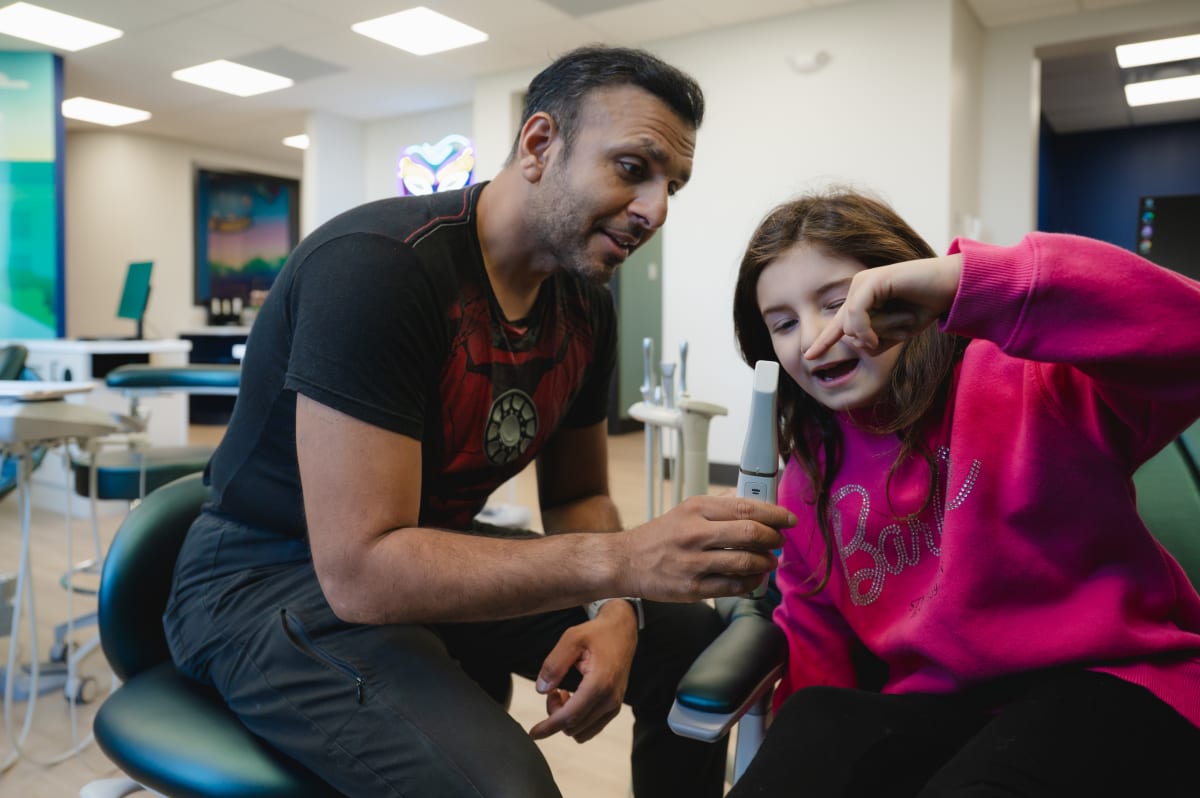
When images are needed, AI-enhanced imaging sharpens the anatomy on screen, so the pictures aren't just black-and-white shadows you nod along to. You can actually see the shape of your child's teeth and follow the reasoning. We also use intraoral cameras for real-time tooth imaging, so you can see exactly what we're seeing as we go. Radiation doses today are very low, so we use a protective apron or thyroid collar when it's needed rather than by reflex.
The Appointment Is Designed Around How Kids Actually Work
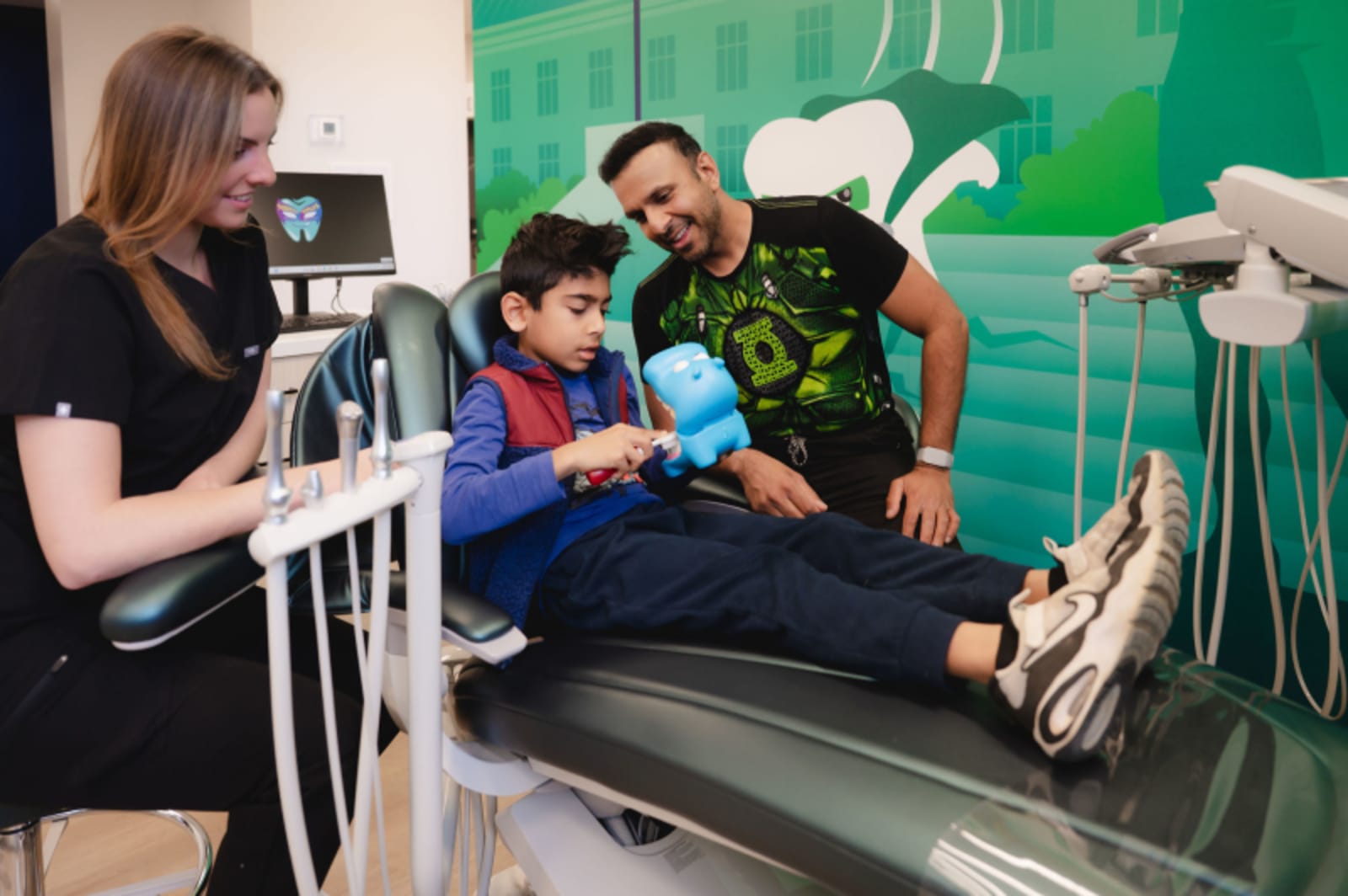
Getting a four-year-old to open wide and stay open is where the real skill comes in. Behavior guidance is a trained clinical specialty, not just a friendly personality. It means knowing when to slow down, when to explain each step in words a kid can follow, and when a child needs a moment and a choice. Dr. Deep trained at Children's Hospital of Pittsburgh of UPMC, where behavior guidance is taught right alongside the clinical work.
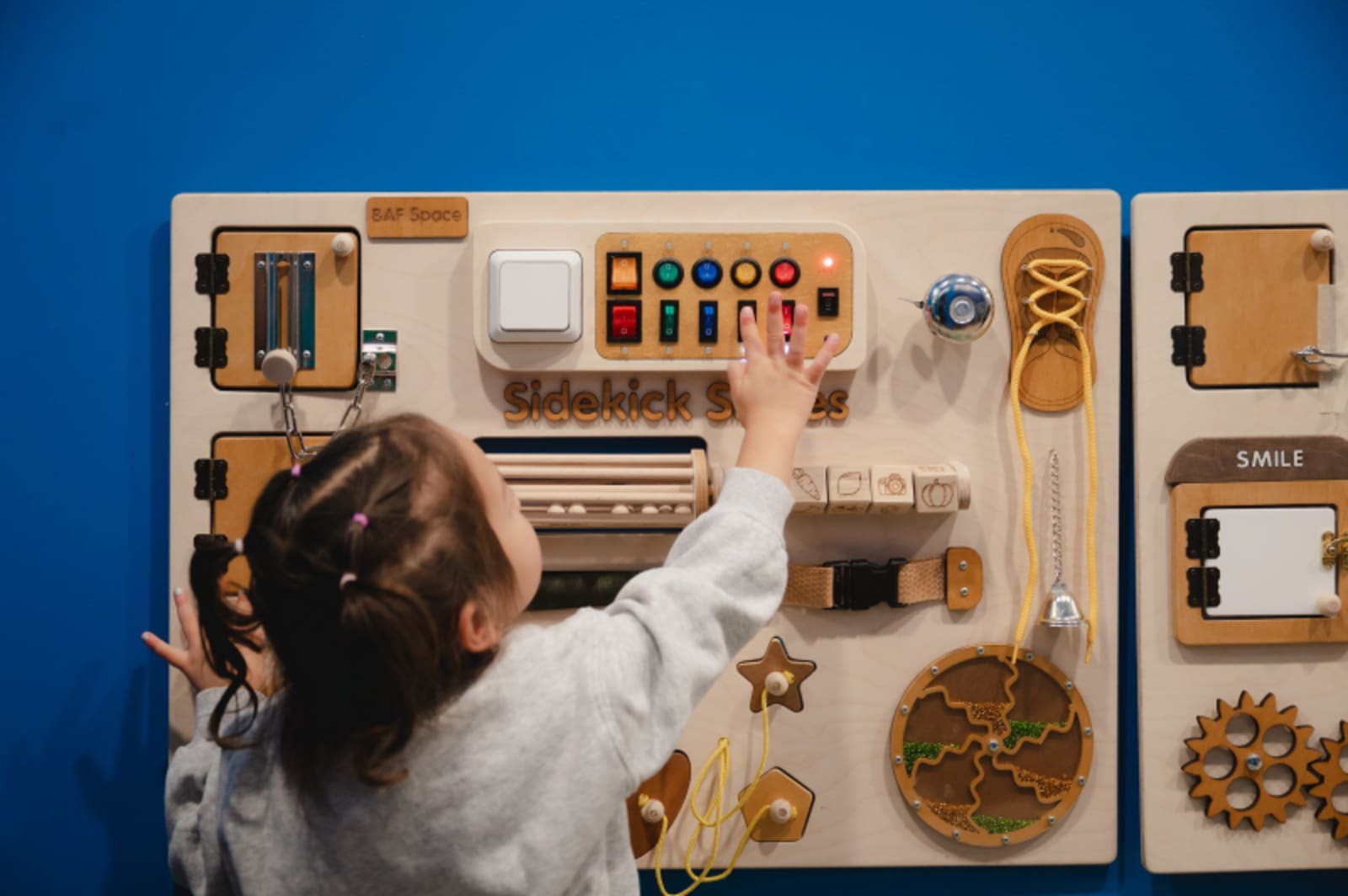
The office reflects that same approach. There are three separate reception spaces, a Montessori area for toddlers, a game room for older kids, and a lounge for parents. For the youngest patients, the exam often happens with your child in your lap. If your child is nervous, they can come in for a get-to-know-you visit first: no cleaning, no instruments, just a chance to meet Dr. Deep, sit in the chair, and leave on a calm note.
Preventive Steps Adults Rarely Get
- Fluoride and Hydroxyapatite Varnish. Children's enamel is thinner and still maturing, making it more vulnerable to cavities. We apply a varnish combining fluoride and hydroxyapatite to strengthen enamel and rebuild early mineral loss before a cavity forms. No trays, no gel, and your child is back to normal after skipping crunchy and hot foods for about thirty minutes.
- Sealants on Brand-New Molars. Permanent molars come in with deep grooves where food and bacteria hide beyond what a toothbrush can reach. A sealant smooths those surfaces over before decay gets a foothold, especially useful while a kid's brushing is still a work in progress.
- Slowing Decay Without Drilling. When a very young child, a child with special healthcare needs, or a situation that calls for delayed treatment comes up, Riva Star offers a way forward. It is a silver fluoride treatment that slows or stops active decay without drilling and is designed to slow or arrest tooth decay as an alternative to conventional silver diamine fluoride.
- When Something Does Need Fixing. Kids get cavities, even the diligent brushers. Fillings are tooth-colored composite and crowns are metal-free zirconia, so a repaired tooth still looks like a tooth. Comfort options range from nitrous oxide for mild nerves to oral conscious sedation or IV sedation for more complex cases, with a pediatric-trained anesthesiologist on site.
The Coaching That Runs Alongside the Exam
A child's visit is half exam, half teaching, and the teaching goes in two directions at once. Unlike an adult cleaning, which is mostly maintenance, a pediatric appointment is built around conversation as much as clinical work.
For your child, it's a friendly lesson on how to angle a brush, why the back molars need extra attention, and a high-five for handling something they weren't sure about. We hand them a mirror and let them watch on the intraoral camera so they understand what's happening in their own mouth. It's their smile, and they should feel ownership over it.
For you, it's the practical stuff that rarely fits into a pediatrician's fifteen minutes: sippy cups, pacifier timing, thumb-sucking habits, brushing battles, and what to do with a tooth knocked loose at soccer practice. The topics shift as your child grows, from habits at two, to technique and first molars at six, to independence and sports protection at ten and up.
Should You Wait Until They're Older?
Plenty of parents assume the dentist can wait until there's a full set of teeth, or until a kid is old enough to sit still and follow directions. That's understandable, and it still means missing something valuable.
The recommendation is the first birthday or the first tooth, whichever comes first. That feels surprisingly early when there's one lonely incisor to look at, and that's kind of the point. The first visit isn't a hunt for problems. It does three quieter things:
- Sets a baseline, so growth and eruption get tracked against something real instead of pieced together from guesswork years later.
- Introduces your child to the room, the chair, and the team while nothing stressful is happening, which makes every visit after that a lot easier.
- Catches anything worth watching while the options are still simple and gentle.
If a filling is eventually needed, it happens with a kid who already knows the place and trusts the person in the room. And if your child is already past that first birthday, nothing is lost. Toddlers, big kids, and teens all get the same relaxed, no-rush welcome on a first visit.
FAQs About Pediatric Dental Exams
Do Baby Teeth Really Matter If They're Going to Fall Out Anyway?
They do. Baby teeth hold space for the permanent teeth forming underneath, and losing one early lets neighboring teeth drift into the gap. They also support chewing and speech development. Decay in a baby tooth can reach the nerve and cause real pain, so it is not something to wait out.
How Often Should My Child Come In?
Every six months is the usual rhythm, though the timing can shift based on cavity risk or what we are seeing as your child grows.
What If My Child Melts Down in the Chair?
It happens, and it is not a failure. Sometimes we slow the visit down, shorten it, or split it across two appointments. Sometimes the right call is a get-to-know-you visit with no treatment at all. A hard first experience does not close the door on dentistry.
Should I Stay in the Room?
For toddlers and young children, yes. The knee-to-knee exam keeps you right in the middle of it. For older kids it depends, and some do better with a parent close by while others rise to the occasion with a little independence. You know your child best, and we will follow your lead.
Ready When You Are
If you've been putting off scheduling because you weren't sure what a pediatric visit involves, now you know. It tracks your child's growth, builds healthy habits early, and helps kids feel comfortable in the chair, all in one appointment built specifically for them.
Dr. Deep would love to meet your little one. We see families across King of Prussia, the Main Line, and the surrounding suburbs on Wednesdays and Fridays, with another day coming soon. Call (610) 992-4910 and we'll walk you through what a first visit would look like for your child.