How Often Should Kids Get Dental Cleanings and Exams?
How Often Should Kids Get Dental Cleanings and Exams?
It's one of those questions that feels like it should have a simple answer, but the more you think about it, the less certain it gets. Your child's teeth look fine. They brush every night (mostly). Nothing hurts. So when the reminder card shows up, it's easy to wonder whether the appointment is actually necessary or just routine for routine's sake.
The honest answer depends on more than most parents expect. Age, habits, how the teeth are coming in, and even things happening outside the mouth all play a role. Below, we walk through what actually drives the schedule, when it needs to change, and what a visit at each stage really looks like.
Ready to get your child on the schedule? Dr. Deep and the team at Sidekick Smiles are welcoming new patients in King of Prussia, the Main Line, and surrounding areas. Give us a call at (610) 992-4910.
What's Actually Happening in Your Child's Mouth Between Visits
Six months is roughly how long it takes for a small problem to become a bigger one. Plaque hardens into tartar if it isn't fully removed, and once it does, no toothbrush can touch it. A weak spot quietly turns into a cavity. A tooth comes in slightly off and starts nudging others. None of it hurts at first, which is exactly the point.
The Cleaning Handles What a Toothbrush Can't Reach
Even great brushers miss spots, especially the back molars and along the gumline. Dr. Deep or a qualified team member clears out that buildup, finishes with a polish, and adds a fluoride treatment when it makes sense for your child's age and risk level.
The Exam Is Where the Early Catches Happen
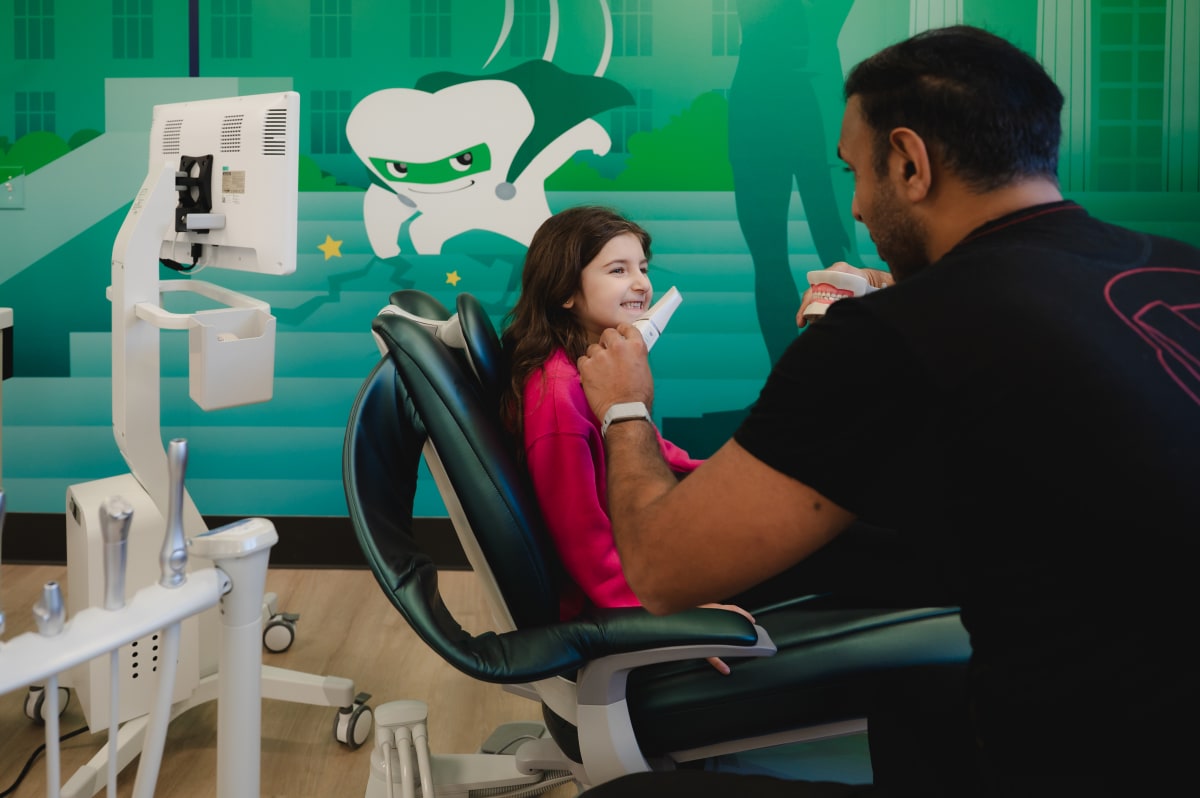
A small cavity is a quick fix. A large one means more work and a harder day for your child. Dr. Deep uses a small camera that shows a live image of your child's mouth on a screen, so you can see exactly what he's looking at.
Here's what a regular checkup can catch:
- Cavities that haven't caused any pain yet, which is most cavities in kids.
- Crowding or gaps forming as adult teeth come in.
- Habits like thumb-sucking or mouth breathing that can affect jaw development over time.
- Signs of airway or sleep issues, like snoring or restless sleep, that often show up in the mouth first.
- Puffy or bleeding gums, very common in kids and very treatable when caught early.
When Should the Very First Visit Happen?
There is no single answer that fits every child, but there are a few clear factors that point you in the right direction:
- The first tooth is the starting signal. Most guidelines recommend a first visit around your child's first birthday, or within six months of that first tooth coming in. Waiting until they have a full set, or until kindergarten, means missing a window that matters.
- Baby teeth can get cavities earlier than you'd expect. Long before your child has the words to tell you something hurts, a problem can already be forming. Early visits catch those things while they are still easy to handle.
- Habits are easier to shape early. Bottles at bedtime, sippy cup use, pacifiers, brushing a toddler who won't sit still. These are the everyday queries parents have, and the answers are a lot more useful before the habits are already set.
- Familiarity builds comfort over time. The more visits your child has before anything needs to be fixed, the more relaxed the whole experience becomes. By the time a real cleaning or X-ray enters the picture, they already know the room, the chair, and the people in it.
When Twice a Year Is Not Enough for Your Child
Higher Cavity Risk
Some kids are simply more prone to cavities, due to the shape of their back teeth, lower saliva production, or a diet heavy in sticky snacks and juice. If your child has already had a cavity, that history matters. More frequent visits mean more fluoride treatments, better brushing guidance, and a stronger chance of catching anything new while it is still a simple fix.
Braces or Aligners
Braces create new hiding spots for plaque around brackets and under wires that a toothbrush cannot always reach. Without regular cleanings, gums can become irritated even while the teeth are straightening. Coming in more often keeps the gums healthy throughout treatment.
Gums That Bleed or Look Puffy
Bleeding or swollen gums are more common in kids than most parents realize, especially in teens. It is not something to panic about, but it is a sign that more frequent professional cleanings and a small adjustment to brushing habits at home can make a real difference.
Dry Mouth or Difficult Brushing
Saliva naturally rinses the mouth and protects teeth from decay. Certain medications or health conditions can reduce it, leaving teeth more vulnerable. For kids who struggle to brush thoroughly due to sensory sensitivities or other challenges, more frequent cleanings help fill in the gaps.
Special Healthcare Needs or Dental Anxiety
Sometimes coming in more often is less about the cleaning and more about making the experience feel familiar. A child who knows the office, the chair, and the team walks in with a completely different mindset. If your child needs a slower start, we can set up a no-treatment visit, just to see the space and meet everyone, before anything else happens.
The Quiet Damage That Happens Between Overdue Appointments
Around month one or two, nothing feels wrong. Your child is brushing, nothing hurts, and skipping one appointment seems harmless. But plaque is already building in the spots a toothbrush misses, and without a professional cleaning, it quietly hardens into tartar. Once that happens, no amount of brushing at home can remove it.
By month four or five, those soft spots have had time to deepen into real cavities. A tooth coming in at an angle goes unnoticed a little longer. Because kids' teeth are thinner than adult teeth, with the nerve sitting closer to the surface, what starts as a small issue can become a painful one faster than most parents expect.
By month six, the window for an easy fix may have passed. There is also the conversation that gets missed, whether brushing has become a nightly battle, whether your child grinds their teeth, or keeps poking at one spot. Those are exactly the things Dr. Deep wants to hear about. If you cannot remember the last visit, now is a good time to get back on track. We will start from wherever your child is, no lecture involved.
Small Things That Make a Real Difference for Nervous Kids
Start Before There Is Anything to Fix
Most dental anxiety comes from not knowing what to expect. The best fix is simple: routine visits before anything ever needs to be done. If your child needs an even slower start, we can schedule a no-treatment visit through the superhero experience, just to walk in, meet the team, and get comfortable with no agenda.
Watch Your Words
Kids pick up on how adults are feeling before they walk through the door. Keep it calm and matter-of-fact. Phrases like "it won't hurt" and "be brave" can backfire because they signal something scary might be coming.
Let the Space Do Some of the Work
Our King of Prussia office has three separate waiting areas: a Montessori-style space for toddlers, a game room for older kids and teens, and a lounge for parents. Each age group gets somewhere that feels right for them before the appointment even starts.
If Treatment Is Ever Needed
We only use tooth-colored materials, no metal, no silver. If your child needs extra support during treatment, we offer nitrous oxide, oral conscious sedation, and in-office IV sedation administered by an on-site anesthesia team that includes a pediatric-trained anesthesiologist. Dr. Deep will always walk you through the right option before anything is decided.
Questions Parents Ask Us Before Booking
Do Baby Teeth Really Need Cleanings if They Are Going to Fall Out Anyway?
Yes. Baby teeth hold the space open for the adult teeth forming underneath them. If one gets infected or has to come out too early, it can affect how the permanent tooth comes in. Some back molars do not fall out until around age twelve, so they are doing real work for a long time.
Does My Child Need X-Rays at Every Visit?
No. X-rays are taken based on your child's age, cavity risk, and what the exam shows, not on a fixed schedule. We only use them when there is something we cannot see by looking, like decay between teeth or a permanent tooth sitting below the gumline. Dr. Deep will always explain the reason before anything happens.
My Child Brushes Every Day and Has Never Had a Cavity. Can We Go Once a Year?
We recommend sticking to every six months. Brushing cannot remove tartar, which is the hardened buildup that forms when plaque is not fully cleared away. Only a professional cleaning can get it off, whether that is done by Dr. Deep or one of our qualified team members. Regular visits also let us track jaw growth and how the permanent teeth are coming in. For low-risk kids, those appointments are usually quick and full of good news.
What if We Are Already Behind?
We start from where you are, no guilt and no lecture. A catch-up visit includes a full exam, a cleaning, and X-rays only if needed. If anything requires treatment, it does not have to happen all at once. We will prioritize what matters most and build a plan that fits your family.
Families in King of Prussia, the Main Line, and Surrounding Areas: Here Is How to Get Your Child Back on Track
The rule is simple: every six months, starting around age one, with more frequent visits if your child's mouth needs a little extra attention. The trickier part is finding a place your kid actually doesn't mind going to, and that is exactly what we have built Sidekick Smiles around. We want your child to walk out feeling proud of themselves, not just relieved it is over. If you want to get a feel for what a visit here looks like before you book, you can take a peek at the superhero experience.
Your child is the hero of this story, and we are just the sidekick. Dr. Deep Shah is a board-certified pediatric dentist, which means he has completed specialized training beyond dental school specifically to care for kids. Dr. Deep or a qualified team member will be in the room with your child at every visit. When you are ready to get that cleaning and exam on the books, give us a call at (610) 992-4910.