Fluoride, Hydroxyapatite & Kids Dental Health: A Guide for Parents
Fluoride, Hydroxyapatite, and Keeping Your Kid's Teeth Cavity-Free
If you're like most parents, you've probably found yourself standing in the toothpaste aisle holding two tubes. One says fluoride, one says hydroxyapatite, and your kid wants the one with the cartoon dinosaur. Both fluoride and hydroxyapatite help enamel repair itself, both are solid choices for kids, and the right one depends on your child's age, cavity history, and whether they can spit yet. Fluoride has the longer research record. Hydroxyapatite is newer, gentler if swallowed, and worth considering for children who cannot yet spit.
Toothpaste is just one piece of the puzzle. Cavities in kids are also shaped by snack timing, saliva, grooves in molars, sleep and breathing habits, and how often those teeth get a professional look.
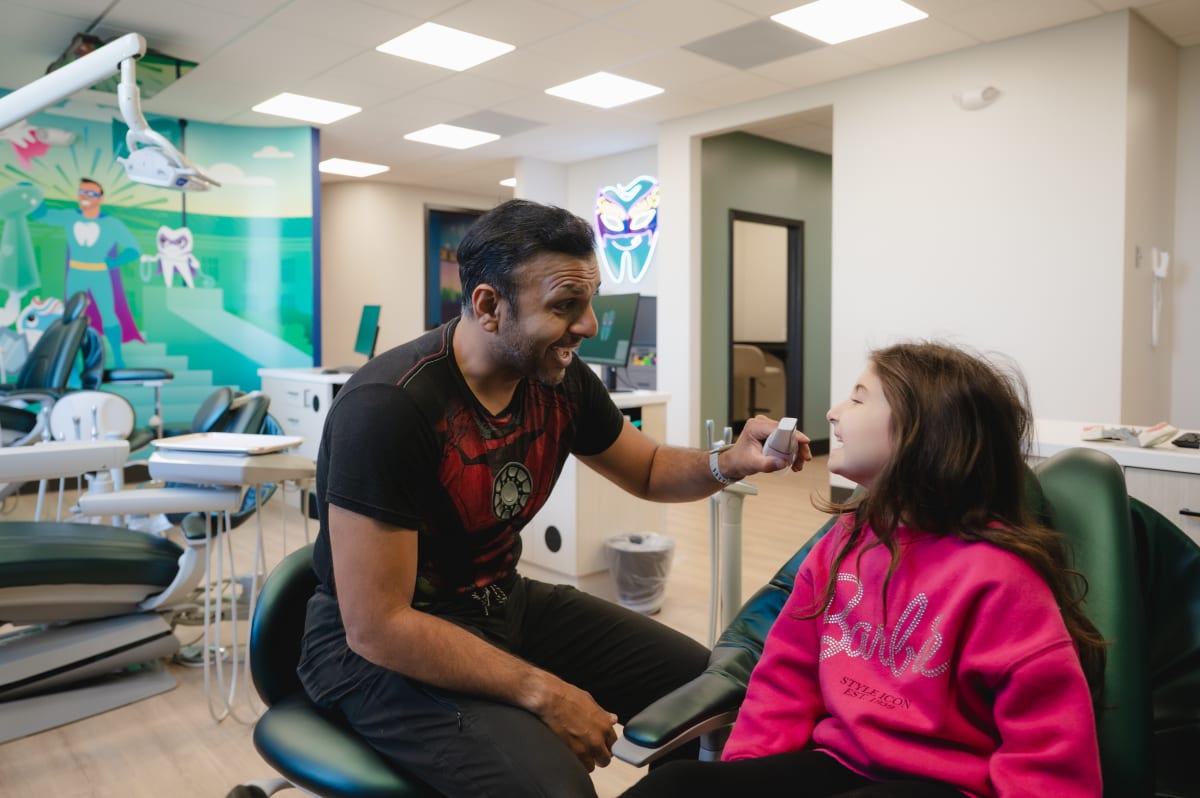
To talk it through with Dr. Deep or our King of Prussia Team, call (610) 992-4910 or see what a visit with us looks like.
What This Guide Covers
- How cavities form, and why baby teeth and new molars are hit hardest
- What early decay looks like at home, and how a pediatric dentist in King of Prussia spots it before it becomes a problem
- Fluoride and hydroxyapatite, how each one works, what the research says, and how they stack up
- Which kids need a little extra protection, and what that looks like
- What preventive care typically costs and how insurance usually works
- How your child's teeth connect to breathing, sleep, and growth, plus what a visit with us actually looks like
How Cavities Actually Form in Children's Teeth
Every mouth is full of bacteria, which is normal and mostly harmless. The trouble starts when certain bacteria get sugar or refined starch to feed on. They break it down into acid, and that acid slowly eats away at the minerals in the enamel. Dentists call this mineral loss demineralization, but think of it simply as the tooth getting worn down from the inside out.
The good news is that the mouth fights back. Saliva washes acid away, neutralizes it, and carries minerals back to the softened spots. This natural repair process is called remineralization, and it runs quietly between meals. A cavity forms when the damage happens faster than the repair, often enough and long enough that the enamel surface finally gives in.
Two groups of teeth lose that tug-of-war more easily.
- Baby teeth. The enamel on a baby tooth is roughly half the thickness of adult enamel, so decay travels faster and reaches the nerve sooner. A small spot on a baby molar can turn into a toothache in months rather than years.
- Newly erupted permanent molars. The first adult molars arrive around age six, tucked behind the baby teeth where kids rarely brush well. Fresh enamel stays softer for a couple of years, so those grooves are at their most vulnerable right when a six-year-old is least likely to reach them.
That push-and-pull is why toothpaste ingredients matter. Everything covered below either slows the damage or speeds up the repair.
Early Warning Signs of Decay and How a Pediatric Dentist Checks for It
Cavities are quiet at the beginning. Pain is a late symptom, which is why a child can go from "seems fine" to "up all night" with no obvious middle stage.
What you can spot at home
- Chalky white spots along the gumline, especially on the upper front teeth. Minerals have left the surface but it's still intact, so these can often be reversed.
- Brown or dark specks in the grooves of the back teeth that don't brush away.
- Sensitivity to cold, sweet, or crunchy foods, or a child who suddenly chews on one side only.
- Food packing between the same two teeth every time, or floss that shreds in one spot.
- Persistent bad breath that doesn't change after brushing.
What we look for at a checkup
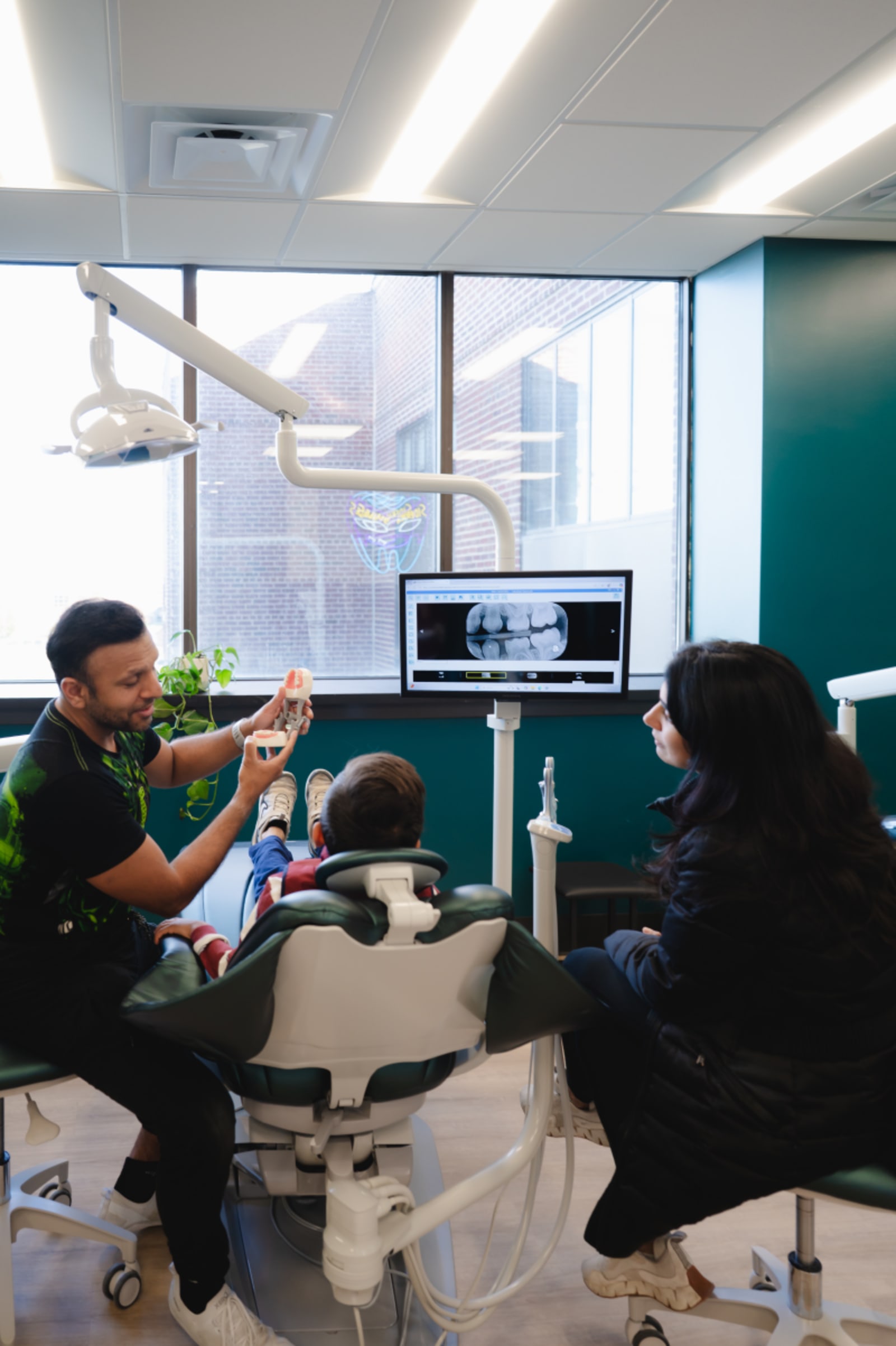
A visual exam catches surface changes, but a lot of childhood decay hides between teeth. X-rays, taken once a child's teeth are touching and at intervals based on their risk, show those hidden spaces. Ours integrate AI, so instead of a traditional black-and-white film, parents see a clearer, more detailed picture of their child's teeth, making it much easier to follow along with what Dr. Deep is pointing out.
An intraoral camera adds another layer, putting a magnified, real-time image of a specific tooth on the screen so kids feel included rather than talked about. If your child is nervous about any of it, we plan around that ahead of time as part of the superhero experience.
Cavity risk assessment
Alongside the exam, we work through a structured risk assessment: past cavities, current white spot lesions, snacking and drink patterns, fluoride exposure, saliva flow, medical history, and how home brushing is really going. That picture turns a checkup into a plan. A low-risk eight-year-old and a high-risk eight-year-old should not leave our King of Prussia office with the same recommendations, and they don't.
Fluoride: How It Works, Where Kids Get It, and What the Research Shows
Fluoride has been the foundation of cavity prevention for generations, and the research behind it is enormous and consistent.
It works three ways. When fluoride is present while enamel repairs itself, it gets built into the crystal structure, making the tooth harder to break down by acid. It also speeds up remineralization, pulling calcium and phosphate back into softened enamel faster than saliva can manage alone. And at higher concentrations, it slows the activity of the bacteria that produce acid in the first place.
Where children encounter it
- Toothpaste. The daily, low-dose exposure that does most of the work. Amount matters far more than brand.
- Fluoride varnish. A sticky, concentrated coating painted on during a checkup at our King of Prussia office. It takes under a minute, requires no trays, and stays in contact with enamel for hours. Afterward, kids just need to skip crunchy and hot foods for about 30 minutes, and that's it.
- Community water. In fluoridated areas, tap water provides a steady, low-level source of fluoride throughout the day.
- Prescription pastes and rinses. Higher-strength options for specific higher-risk kids, generally older children who can reliably spit.
The swallowing and fluorosis conversation
Swallowing more fluoride than intended over a long stretch, while permanent teeth are still forming (roughly under age eight), can cause dental fluorosis. In most cases that means faint white flecks or streaks in the enamel: a cosmetic change, not a health problem or a weakened tooth. More noticeable changes require far more exposure than a correctly dosed smear of toothpaste delivers.
The protections are simple. Use the age-appropriate amount, not a ribbon across the brush. Keep the tube out of reach. Supervise brushing while your child is learning to spit. We also recommend a hydroxyapatite-based toothpaste for children who cannot yet spit. And let Dr. Deep know about any other fluoride sources, because his recommendation accounts for the total picture. If you're unsure how fluoride fits into your child's routine, that's exactly the kind of thing he works through at a checkup.
Hydroxyapatite Toothpaste: What It Is and What the Evidence Says So Far
Hydroxyapatite isn't an additive borrowed from somewhere else. It's actually the main mineral tooth enamel is made of, roughly 97 percent of it.
In toothpaste it usually appears as nano-hydroxyapatite, which just means very tiny particles small enough to settle into the microscopic pits left by acid erosion and bond with the existing enamel surface. Rather than making the tooth harder to dissolve, as fluoride does, the idea is to give the tooth back the exact material it lost. Some studies also suggest the particles make it harder for bacteria to stick to the tooth surface.
Nano-hydroxyapatite came out of NASA research on bone and mineral loss in astronauts, was licensed in Japan in the 1980s, and has been a mainstream toothpaste ingredient there ever since. It's widely used across parts of Europe as well. What's newer is its availability on American shelves.
Lab studies are consistently encouraging, showing enamel remineralization, reduced sensitivity, and a smoother tooth surface. A growing set of clinical trials, including some head-to-head against fluoride, suggests comparable results in certain situations. What's genuinely thinner is long-term, large-scale data in children specifically, the kind of decades-deep population evidence fluoride has built up. We recommend hydroxyapatite-based toothpaste for patients who cannot yet spit.
Fluoride vs. Hydroxyapatite: An Honest Comparison for Parents
These are not enemies, and you don't have to pick a team.
How each one works
Fluoride makes enamel more acid-resistant and disrupts cavity-causing bacteria. Hydroxyapatite resupplies the mineral enamel is made of and fills in early surface damage. Different routes to the same goal: a tooth that holds up against the next acid attack.
Depth of research
Fluoride wins clearly, with decades of research across huge populations of children. Hydroxyapatite has a solid and growing body of studies, much of it from Japan and Europe, but less long-term data in kids specifically. If the deepest research record matters most to you, fluoride is the stronger choice.
Safety if swallowed
Hydroxyapatite wins here. It is the same mineral teeth and bones are made of, so swallowing it is not a concern and there is no fluorosis risk. That matters a lot for toddlers who treat spitting as optional, or children who have a harder time spitting reliably.
Taste, texture, and getting kids to cooperate
Hydroxyapatite pastes are usually free of strong mint and the foaming agents that some kids find harsh or burning. If your child has rejected every toothpaste you've tried, a milder formula can be the difference between brushing and wrestling. Fluoride pastes come in every kid flavor imaginable, which is its own advantage. When brushing is already a nightly battle, how a dental visit is set up matters just as much as what's on the brush.
Who each tends to suit
- Fluoride tends to suit children with a cavity history, deep grooves, white spot lesions, braces, or any elevated risk, and kids who can spit reliably.
- Hydroxyapatite tends to suit very young children who cannot yet spit, kids who react badly to conventional pastes, families already getting fluoride from water and in-office varnish, and households that prefer to skip fluoride at home.
- Plenty of families use both: hydroxyapatite at the sink, fluoride or hydroxyapatite varnish at checkups. Those are not in conflict.
Make the choice with your child's actual situation in front of you, not from a label in a store aisle. Bring the tube you're using to the next checkup and Dr. Deep will look at it alongside your child's teeth, habits, and history.
Which Kids Need Extra Protection, and Why
Some children brush inconsistently and never get a cavity. Others do everything right and still develop decay. That is not a parenting grade; it is biology, and it is why prevention should be personalized.
- A history of cavities. Past decay is the strongest predictor of future decay. These kids usually need more frequent checkups and extra fluoride varnish, which we build into their care plan in King of Prussia, the Main Line, and surrounding areas.
- Deep grooves and pits. Some molars come in with grooves so narrow that no toothbrush can reach the bottom. Sealants are designed for exactly these teeth.
- Dry mouth from medication. Many ADHD medications, antihistamines, and asthma inhalers reduce saliva, which means less natural rinsing and repair. Sipping water, xylitol, and rinsing after inhaler use all help.
- Enamel defects. Some kids are born with enamel that is chalky, soft, and sensitive, a condition called molar incisor hypomineralization. These teeth need earlier and closer attention from day one.
- Braces and appliances. Brackets and wires create dozens of new hiding spots for plaque, and white spots on the enamel can show up within months if brushing slips.
- Sensory differences and special healthcare needs. When brushing is genuinely hard to tolerate, the answer is adapting the routine, not asking for more willpower. Flavor changes, different brush textures, and shorter sessions all matter, and our superhero experience is built around that flexibility.
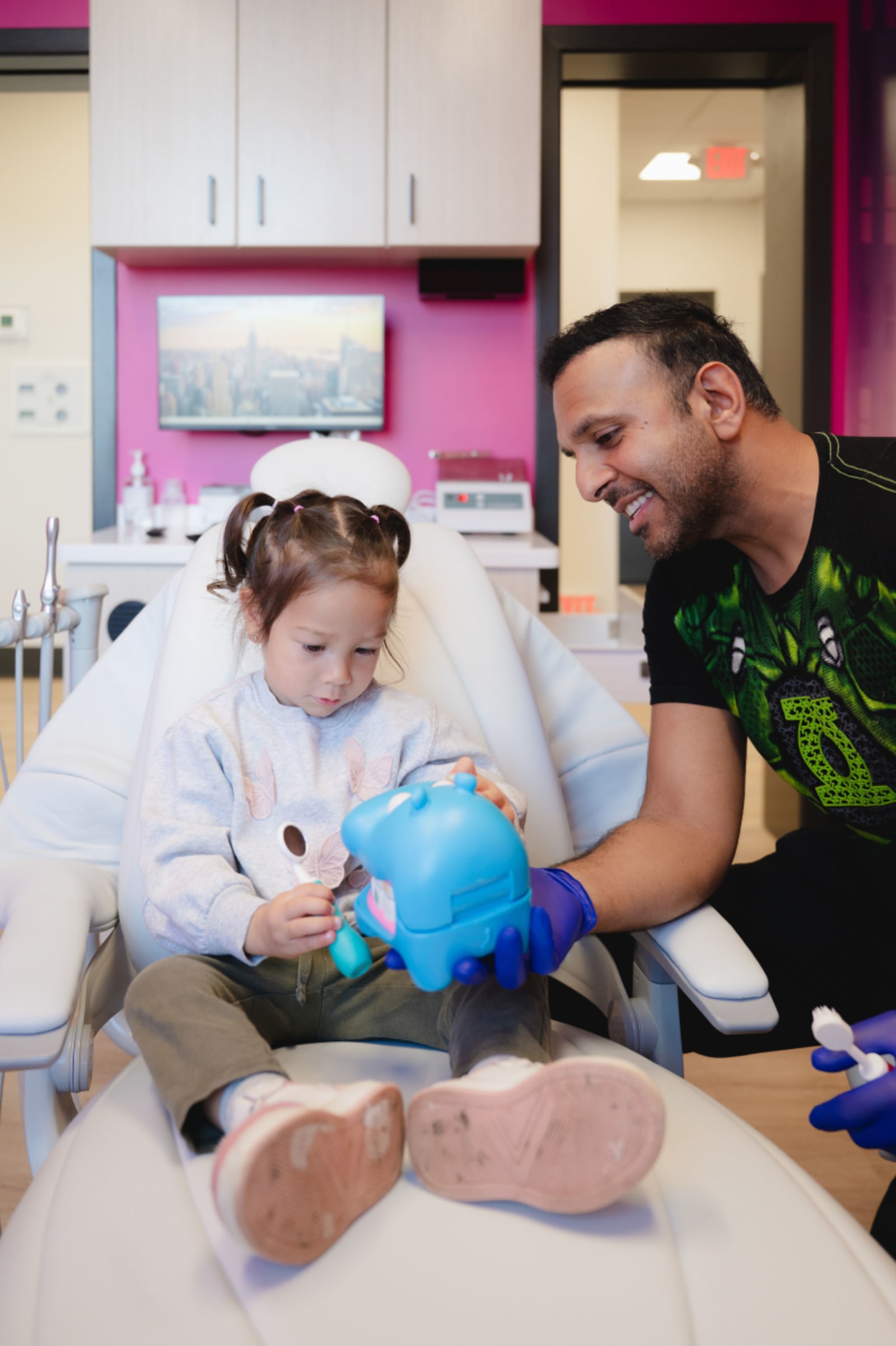
- Dental anxiety. A nervous child avoids care, so problems get found later and larger. Dr. Deep treats anxiety as something to work through together, starting with a friendly get-to-know-us visit if that is what a child needs, no treatment, no instruments, just a chance to meet the team and feel comfortable at their own pace.
What Preventive Care Costs and How Insurance Typically Handles It
Here's the simple truth: a checkup, cleaning, and varnish is a small, predictable expense a couple of times a year. A filling costs more. A cavity that needs a crown, pulp therapy, and sedation costs considerably more, and takes a bigger toll on your child. Prevention is the least expensive dentistry there is.
Most dental plans cover two preventive visits a year at or near full coverage, and many include fluoride varnish and sealants for children, sometimes with age limits or per-tooth rules. Restorative work is usually covered at a lower percentage, often with a deductible and an annual maximum that one bigger treatment plan can reach quickly.
We're a PPO and fee-for-service practice, so we're not built around volume. Appointments run longer, and the plan Dr. Deep recommends is the one he genuinely believes your child needs.
Exact costs depend on your plan and your child's needs, so we walk through everything with you before anything is scheduled, including what your benefits cover and what they don't. Financing through Cherry is available if spreading a larger treatment plan out makes it easier to say yes to the right care.
How Prevention Fits Into Your Child's Whole-Health Picture at Sidekick Smiles

Teeth don't exist in isolation. How a child breathes, sleeps, eats, and grows all show up in the mouth, so we look for those connections instead of treating each tooth as a separate problem.
A child who snores, sleeps restlessly, breathes through their mouth, or wakes up tired may have an airway issue worth looking into. As an Airway Certified Provider, Dr. Deep has the training to do exactly that. Chronic mouth breathing dries the mouth, raises cavity risk, and can affect how the jaws develop over time. Tongue and lip ties can affect infant feeding, speech, and how easily food clears from around the teeth. When a release is the right call, we perform it with a CO2 laser. We also track bite and jaw development over time, because catching a pattern at seven is a lot easier than correcting it at fourteen.
Your child is the hero of this story and we're the sidekick, which changes how appointments run. Nothing gets done to a child who doesn't know what's coming. We explain, we show, we let them see their own tooth on the screen, and we go at their pace. Three separate waiting spaces (a Montessori area for toddlers, a game room for older kids and teens, and a parent lounge) mean nobody is stuck in a room built for someone else's age group.
If your child is nervous, we'll gladly book a get-to-know-us visit first. No treatment, no instruments, just a chance to meet Dr. Deep and the team, sit in the chair if they want to, and go home feeling good about it. Plenty of families from King of Prussia, the Main Line, and surrounding areas start exactly that way.
Whether you've decided on fluoride, you're leaning toward hydroxyapatite, or you just want an honest read on how your kid's teeth are doing, we'd love to meet you.
Call Sidekick Smiles at (610) 992-4910 and we'll find a time that works.