
Children’s Dental Cleanings & Exams: What to Expect
Children's Dental Cleanings and Exams: What Every Parent Should Expect
A routine cleaning and exam with Dr. Deep or one of our qualified team members takes roughly a half hour: clearing plaque a toothbrush can't reach, checking every tooth and how the mouth is growing, and talking through what to watch until next time. For most kids, nothing about it hurts.
Dr. Deep Shah built Sidekick Smiles in King of Prussia around one idea: your kid is the hero of the story, and we're the sidekick. That shapes everything from how we introduce a nervous four-year-old to a spinning toothbrush to how we explain a finding to you in plain language afterward. We also use technology to make the visit more informative for both you and your child. Our intraoral camera captures phone-like images of your child's teeth, allowing you to see what we're seeing in real time. When X-rays are needed, we also use AI-assisted imaging technology to transform traditional black-and-white X-rays into more visually accessible, colorful images that can make it easier for parents to understand what they're looking at and follow along with our recommendations.
Ready to book your child's visit? Call us at (610) 992-4910; we're always welcoming new little/big heroes from King of Prussia, the Main Line, and surrounding areas.
What This Guide Covers
- What preventive dental care includes, and why it's more than a twice-a-year cleaning
- When to start visits, how often kids need them, and why cavities happen even to kids who brush
- A step-by-step walkthrough of the cleaning and exam, including what gets checked beyond cavities: bite, jaw growth, gums, habits, and airway
- X-rays, the preventive toolkit, and the options we don't use and why
- Helping an anxious child, including comfort and sedation options
- What happens when a cleaning turns up something that needs treating, plus home habits and aftercare
- Costs, insurance, financing
What Preventive Dental Care Means for Kids
Preventive care is everything done to keep a small mouth healthy before anything goes wrong. A child's mouth is a moving target. Baby teeth arrive, roots dissolve, permanent teeth push through, jaws widen, and habits like thumb-sucking, prolonged pacifier use, or mouth breathing quietly nudge things off course. Preventive care tracks all of that on a schedule, so small drifts get corrected while they're still small.
In practice, it looks like this:
- Professional cleanings and exams with Dr. Deep or a qualified team member that remove buildup no toothbrush can lift and catch decay, crowding, and growth patterns early
- Strengthening treatments like fluoride or hydroxyapatite varnish and sealants for teeth at higher risk
- Imaging when there's a clinical reason to look beneath the surface
- Coaching on brushing, flossing, snacking, and drinks
- Airway and functional awareness, watching how a child breathes, swallows, and rests their tongue
How a child breathes at night and how their jaw develops are connected, and as an Airway Certified Provider, Dr. Deep watches for those patterns at every checkup and can help address them when needed. If your child needs a slower start, we offer a no-treatment visit to meet the team first.
When Should Kids Start Going to the Dentist, and How Often?
Pediatric dental organizations recommend a first visit by the first birthday, or when the first tooth erupts, whichever comes first. We like to call this recommendation "The Rule of 1", since a one-year-old with no problems gets a calm, curious, two-minute lap exam and leaves.
That's the memory we want stored, and it's the whole idea behind the superhero experience at our King of Prussia office, serving the Main Line and surrounding areas. Starting early also establishes a dental home, a single familiar place where Dr. Deep gets to know your child's history and temperament, and where patterns show up over years that a new provider would miss.
How often visits happen
Twice a year suits most kids. Some need more, some less, decided by risk rather than calendar habit:
- Every six months: The standard for a child with healthy teeth, decent habits, and no history of decay.
- Every three to four months: Often recommended for kids with repeat cavities, sensitivity, braces, deep grooves in their molars, special healthcare needs, or a diet heavy in sipping and grazing. For these cases, we offer AirFlow therapy, an advanced, non-invasive and painless cleaning method that can help enhance the process.
- Sooner than scheduled: Any time there's pain, swelling, a chipped tooth, or a bump on the gums.
Why Kids Get Cavities in the First Place
Enamel that's still young
Baby teeth have thinner enamel than adult teeth, and newly erupted permanent molars are more susceptible to decay while they’re still maturing. That’s why a cavity that could take years to progress in an adult may progress much faster in a six-year-old.
Frequency of sugar, not just amount
Every time a kid eats or drinks something with sugar, it gives bacteria in the mouth a chance to produce acid. A cookie eaten in a few minutes is one exposure, while slowly sipping a juice box all afternoon keeps that process going again and again. Frequent snacking, sipping sugary drinks, and bedtime bottles can give teeth more repeated acid exposure than an occasional dessert. Keep this simple formula in mind: Sugar + Bacteria = Acid. The goal is to limit how often this happens and how long the acid stays around.
Brushing skill lags behind independence
Kids want to brush alone long before their hands can do it well. Most need an adult checking behind them until around age seven or eight, since this is when fine motor skills are well developed, and before that back molars and the gumline get missed most. Dr. Deep walks families through those trouble zones at each visit.
Genetics, biology, and mouth breathing
Groove depth, saliva flow, and enamel mineral quality all vary from kid to kid, and some children are simply higher risk through no fault of anyone's. Saliva matters too because it rinses and neutralizes acid, and a child who sleeps with their mouth open wakes with less of it. That's why we ask about snoring and breathing at every checkup.
Step by Step: What Actually Happens During a Cleaning and Exam
1. Arrival and getting comfortable
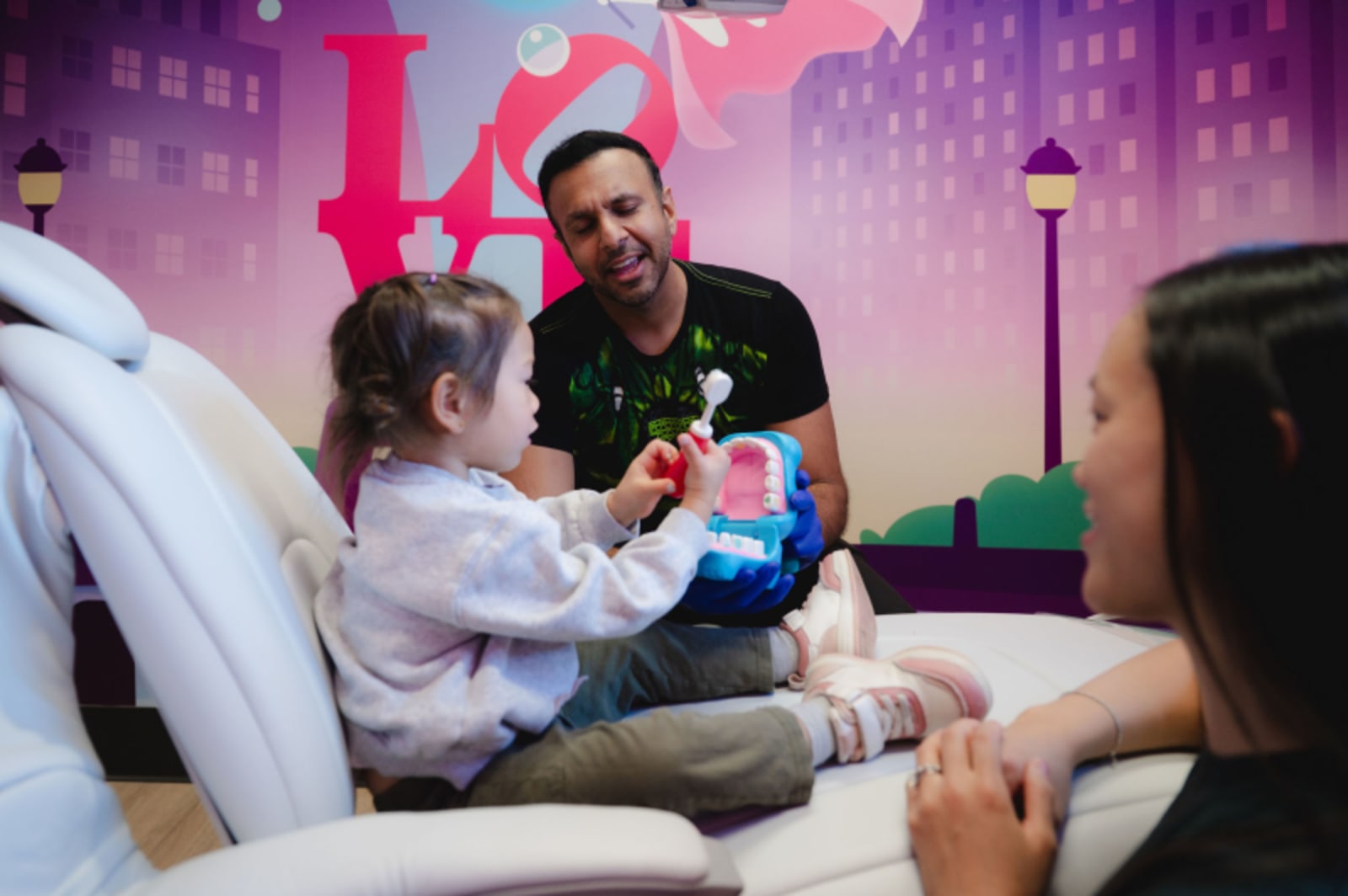
Check-in is quick, and we give every child a chance to de-stress before they are brought back for their visit. Play first is at the forefront of our approach, so your child can spend some time getting comfortable in the environment before meeting with the dental team. There’s a Montessori area for toddlers, a game room for older kids and teens, and a lounge for parents who’d like a minute of quiet. When your child is ready, a team member walks them back at their pace, giving them time to look around, ask questions, and get familiar with the dental chair and their surroundings.
2. Cleaning
Dr. Deep or a qualified team member uses small hand instruments and a soft spinning cup with flavored paste to gently clean and polish each tooth. Most kids find the spinning cup a little tickly, and your child gets to choose the flavor, which is often a highlight of the visit.
3. Flossing and fluoride
Every contact point between teeth gets flossed, clearing what the brush missed and checking how the gums are responding. If a varnish is recommended, a flavored fluoride or hydroxyapatite varnish is painted on in about a minute to help remineralize enamel and repair early areas of mineral loss, helping strengthen the tooth before a cavity forms.
4. X-rays, if indicated
Not every visit includes them. When there's a clinical reason, small sensors capture views of the teeth and bone in a few seconds each. More on how that decision gets made in the X-rays section below.
5. The exam and the conversation
Dr. Deep reviews any notes, images, and checks the teeth, gums, bite, and jaw. You leave knowing what was found, what it means, and what comes next, all in plain language. A routine visit runs roughly half an hour. First-timers and anxious kids often take longer, which is completely fine.
What the Dentist Is Looking For Beyond Cavities
Checking for decay is maybe a third of what an exam accomplishes. The rest is a developmental checkpoint for the whole mouth, and it's how Dr. Deep tracks a child's growth visit to visit.
- Bite and jaw development: crossbites, deep bites, open bites, and whether there's room for permanent teeth coming in. All easier to address while jaws are still growing.
- Spacing and crowding: gaps in baby teeth are a good sign; tightly packed baby teeth often predict crowded permanent ones
- Gum health: puffiness, bleeding, recession, and tissue changes around erupting teeth
- Grinding and oral habits: worn edges, thumb-sucking, pacifier use, and tongue thrust all move teeth over time
- Tongue and lip mobility: restrictive ties that can affect feeding, speech, and how the tongue rests
- Airway and sleep signals: snoring, chronic mouth breathing, and restless sleep, which Dr. Deep, an Airway Certified Provider, tracks as part of functional dentistry
Catching a crossbite at six or a habit tipping front teeth outward at four shapes the next several years of care far more than finding a small cavity does.
Kids' Dental X-Rays: When They're Needed and How Safe They Are
Much of what matters in a child's mouth is invisible from the outside: decay between teeth, developing roots, permanent teeth forming in the bone, and infection near a root tip. X-rays show all of it, including crowding and spacing problems before they become urgent.
How often, and who decides
Frequency is risk-based, not automatic. A child with no decay history, wide spacing, and strong home habits may go a long stretch without images. A child with repeat cavities, tight contacts between molars, or an unusual eruption pattern may need them sooner. Dr. Deep recommends imaging when there's a clinical question it can answer, and he'll tell you what that question is.
Safety
Modern digital sensors use very low radiation doses. Our X-rays also integrate AI so images go beyond black and white, making it easier for you to see and understand your child's tooth anatomy. Pediatric technique is built around small bodies: smallest sensor, tight collimation, protective aprons and thyroid collars if needed, and no repeats. That small exposure buys the chance to catch a hidden problem while it's still simple to treat.
The Full Range of Preventive Options: Fluoride or Hydroxyapatite, Sealants, and Alternatives
Fluoride and hydroxyapatite varnish
Fluoride and hydroxyapatite varnishes both strengthen enamel and help reverse early demineralization, the chalky white spots that come before an actual hole. Hydroxyapatite also helps remineralize enamel and repair early areas of mineral loss, strengthening the tooth before a cavity has a chance to form. In-office varnish sets on contact, takes about a minute, and comes in flavors. It matters most during the years when brushing technique is still developing.
Dental sealants
Molars have deep grooves that bristles cannot reach. A sealant is a thin coating flowed into those grooves and hardened, turning rough terrain smooth. Sealants usually go on permanent molars soon after they erupt, around ages six and twelve, and sometimes on baby molars with especially deep pits. They wear down over time, so we check them at cleanings.
Silver Diamine Fluoride (Riva Star)
Riva Star is a silver fluoride treatment that can help slow or arrest active tooth decay without drilling, making it a useful option for some young children, kids with special healthcare needs, or when traditional treatment needs to be delayed. Unlike conventional silver diamine fluoride, Riva Star is designed to minimize the dark staining associated with decay while still delivering the benefits of silver fluoride therapy. We use it when appropriate to help preserve healthy tooth structure while keeping aesthetics in mind.
Home habits and diet
What happens daily matters more than anything applied twice a year. We’ll educate you on different toothpaste options, including fluoride and hydroxyapatite, and help you choose what feels right for your family based on your child’s individual cavity risk. Once a child can reliably spit, we typically recommend using a pea-sized amount of fluoride toothpaste. Families who prefer fluoride-free or hydroxyapatite toothpaste can discuss those options with us as well.
Xylitol gum or mints can support the routine for older kids between meals, but neither replaces brushing. Most importantly, diet and daily habits are often the biggest levers. Addressing habits such as a nightly milk cup or an all-day juice bottle can make a bigger difference than any single product.
At every checkup, Dr. Deep takes the time to understand your child’s routine, explain the available options, and help your family make choices that work best for your child.
Helping an Anxious Child Through a Dental Visit
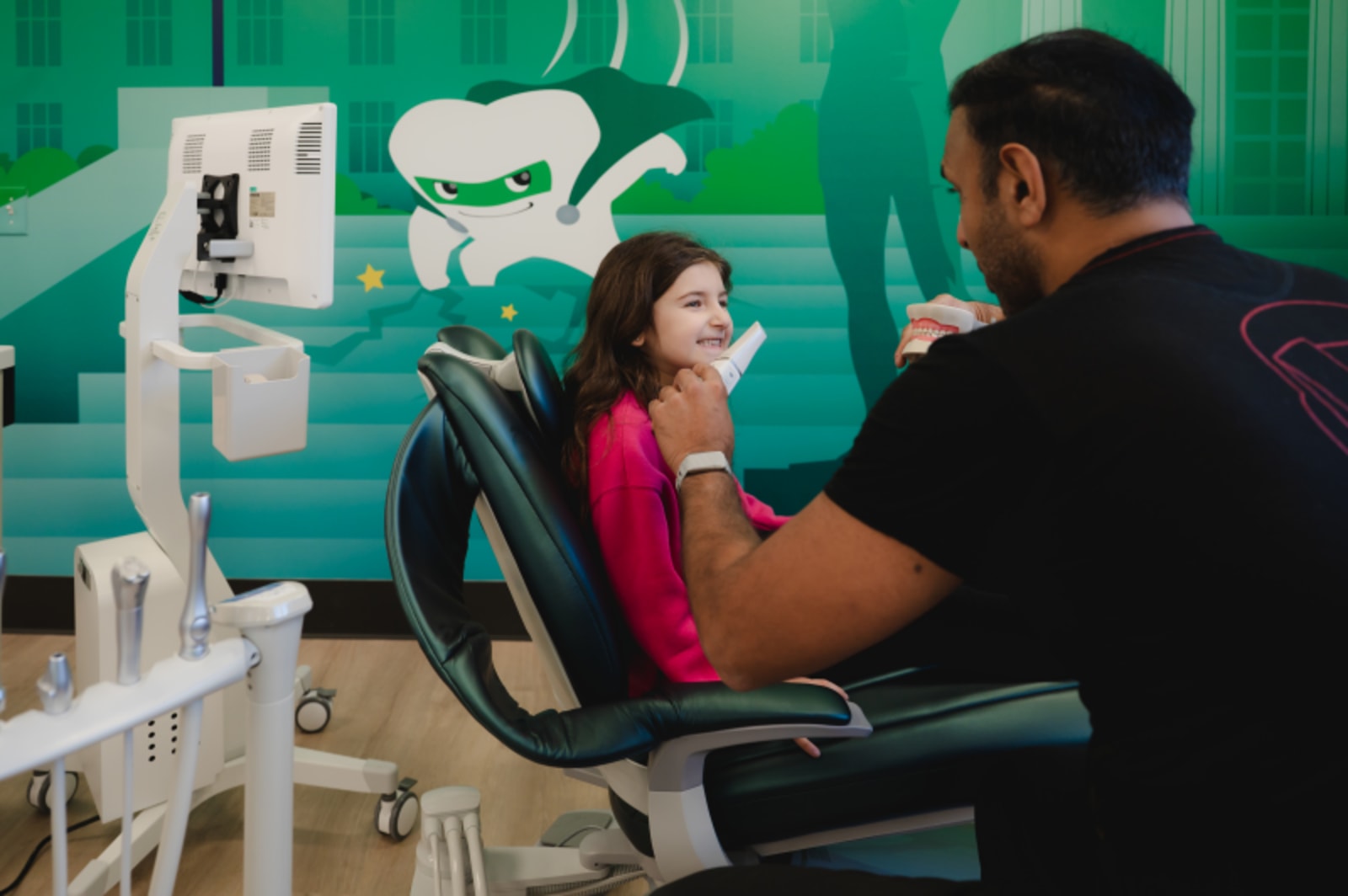
Some kids walk in ready for anything. Some need a slower on-ramp. Both are normal.
What helps at home before the visit
- Talk about it a day or two ahead, not weeks out, and keep it casual
- Skip "it won't hurt" and describe what's actually true: the chair goes up and down, someone counts their teeth, they pick a flavor
- Read a picture book or play pretend dentist at home to make it familiar
- Let them bring a stuffed animal, keep your own bad dental memories out of earshot, and book a time when your child is at their best
What we do in the chair
Pediatric behavior guidance is mostly simple: explaining a tool before using it, narrating each step, offering real choices, and pacing to the child rather than the schedule. Dr. Deep keeps praise specific so a kid knows exactly what they did well. Nobody gets held down or talked over. That's the heart of the superhero experience we've built in King of Prussia, the Main Line, and surrounding areas.
Come-meet-us visits
For a child who's genuinely scared, we offer a visit with nothing clinical on the agenda. They explore the space, meet the team, sit in the chair if they want to, and go home. It lets a nervous kid be brave in a room where nothing is at stake, so the real appointment feels like a return trip. Call (610) 992-4910 to set one up.
Comfort and Sedation Options for Kids Who Need More Support
Sometimes preparation and patience aren't enough, or the treatment needed is more than a young child can reasonably sit through.
Nitrous oxide
Laughing gas delivered through a small scented nose mask. Your child stays awake and aware, just noticeably more relaxed. It wears off within minutes, so kids go back to their normal day. Best for mild to moderate nervousness and shorter procedures.
Oral conscious sedation
Medication taken by mouth before the appointment that produces a sleepy, calm state. Your child breathes on their own and can be roused, but is drowsy and often remembers little of the visit. Throughout the procedure, your child is closely monitored with tools such as a pulse oximeter, respiratory rate monitoring, and capnography to track oxygen levels, breathing, and carbon dioxide levels. This option can be a good fit for significant anxiety, very young patients, or children who cannot yet cooperate for a longer appointment. Plan for continued supervision and a groggy afternoon afterward.
IV sedation
Medication is given through an IV and carefully adjusted throughout treatment. For children who need extensive dental work, have significant anxiety, or may benefit from completing multiple procedures in one visit, IV sedation can allow treatment to be completed comfortably in our office.
Our approach is different from many dental practices. IV sedation is performed in-house with the support of our dedicated anesthesia team, including an anesthesiologist who is trained and experienced in caring for children.
The right option depends on your child's age, health history, temperament, and how much work needs doing. It's a decision made with you, not handed to you. Take a look at the superhero experience, or call our office serving King of Prussia, the Main Line, and surrounding areas at (610) 992-4910.
When a Cleaning Turns Into Treatment: What Comes Next
Tooth-colored fillings
When decay breaks through enamel, we remove the damaged part and rebuild the tooth with composite matched to your child's natural shade. Nothing metal, nothing silver.
Zirconia/BioFlx crowns
When a tooth is too damaged for a filling to hold, it needs full coverage. We offer two options in office: our white zirconia crowns, which are strong, biocompatible, and look like a real tooth, and our BioFlx crowns, which blend that same natural look with a flexible, high-impact polymer design for a fast and gentle placement process.
Extractions
Occasionally a baby tooth is beyond saving or is blocking a permanent tooth. The bigger conversation after removal is what holds the space so neighboring teeth don't drift.
Laser frenectomy
When a tongue tie or lip tie restricts movement, feeding, or oral function, we release it with a CO2 laser. Quick, precise, and typically done in one visit.
Referrals for orthodontics and other specialists
Some findings belong with another provider, and growth concerns may mean an orthodontic evaluation. Dr. Deep is also an Airway Certified Provider who addresses airway concerns directly, though some situations may still call for collaboration with an ENT or sleep specialist. When that's the case, we'll say so clearly rather than treating around it.
Aftercare and Home Habits That Keep the Results
A cleaning resets the mouth. The next six months decide what shape it's in when you come back.
Right after the visit
After a plain cleaning, kids eat and drink normally. If fluoride or hydroxyapatite varnish was applied, skip crunchy or hot foods for about 30 minutes and wait until evening to brush. After a filling, watch for cheek biting until the numbness fades. After sedation, expect a sleepy afternoon.
Brushing by age
- Before teeth: wipe gums with a damp cloth after feeds
- First tooth to age 3: rice-sized smear of hydroxyapatite based toothpaste, adult does the brushing
- Ages 3 to 6: pea-sized amount of fluoride based toothpaste, if the child can spit well, or hydroxyapatite based toothpaste, in both cases adult-supervised brushing
- Ages 6 to 8: child starts, adult finishes the back molars
- Age 8 and up: mostly independent; electric brushes help kids who rush
Flossing
Start as soon as any two teeth touch. Floss picks are easier for small hands. Once a day, before bed.
Food, drinks, and mouthguards
Water between meals is the single best habit. Keep juice and sports drinks to mealtimes rather than all-day sipping, and nothing but water in bed. Any sport with contact deserves a mouthguard. A knocked-out permanent tooth means a lifetime of dental work. Bring questions to the next visit and Dr. Deep will walk through the plan with you.
What Kids' Cleanings and Exams Cost, and How Insurance Works
The fee for a preventive visit depends on what it includes: exam, cleaning, fluoride, and whether images are taken. We review the specifics with you before treatment happens, not after.
Preventive care is typically the best-covered category, and most plans cover cleanings and exams at a higher percentage than fillings or crowns, with many covering them fully. Frequency limits usually allow two cleanings per benefit year. Fluoride and sealants often have age caps, and X-rays run on their own schedule, which matters if larger treatment is planned near the end of a benefit year. We work primarily on a PPO and fee-for-service basis.
For treatment beyond routine preventive care, we offer Cherry financing, which lets families spread payments over time.
Booking Your Child's Visit at Sidekick Smiles
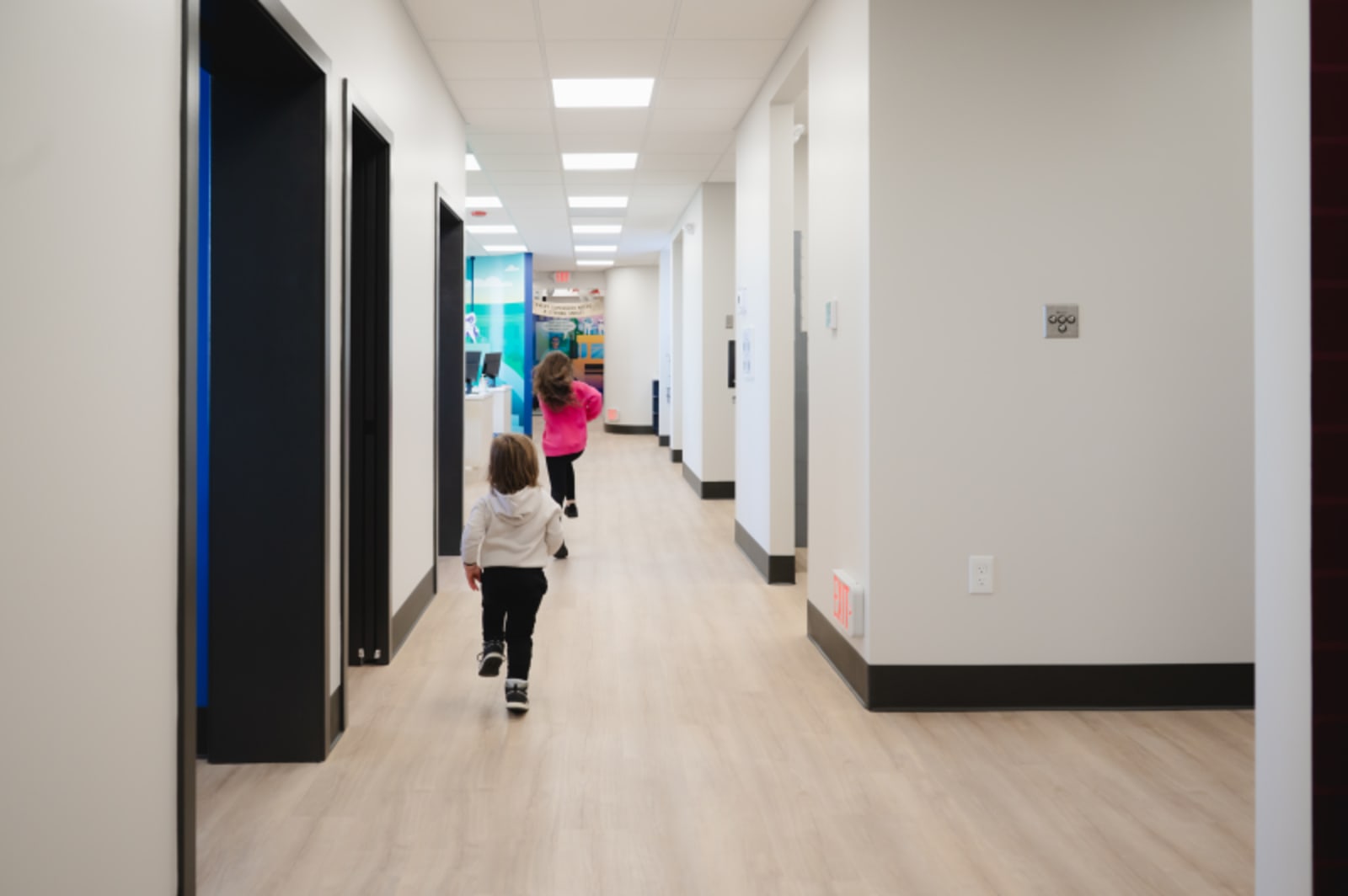
We're at 700 South Henderson Road in King of Prussia, open Wednesday during standard business hours, Friday mornings through early afternoon, and the first Saturday of each month. We welcome families from across the Main Line and surrounding areas, and we're also looking to add another day to our week in the near future. Bring your insurance information, any records from a previous dentist, and your questions. New patient forms can be completed ahead of time.
The first appointment is built around getting to know your child, not racing through a checklist. If a real appointment feels like too much right now, tell us when you call and we'll set up a no-treatment visit to just come meet us instead.
When you're ready, call us at (610) 992-4910. Your kid gets to be the hero of this one. We're happy being the sidekick.